Before You Call Your Bank: How a Loan Mod Call Can Affect Your Credit
Quick Answer
Before you ask your bank about a loan modification, short sale or deed in lieu, decide what your hardship is and document it, know your California anti deficiency protections, and keep a record of everything you tell the bank. Those early answers can affect your credit, your taxes and how soon you can buy again.
Your credit is decided in two places
Most homeowners think of credit damage as one event. It is really two:
- The late payments. Every 30, 60 and 90 day late payment is reported along the way. Most bank workouts expect you to be late before they will talk seriously.
- The final remark. When the loan ends, whether through a short sale, deed in lieu or foreclosure, the bank reports how it ended. That remark is what future lenders read when they decide whether to lend to you.
Both can be negotiated. Both start with your first conversation with the bank.
Why the first call matters
The bank's loss mitigation department sounds like help, but it works for the collections side of the bank. Every answer you give goes into your file. In our experience, servicers ask the same questions over and over to document the file before they let anyone negotiate.
Those answers can later decide:
- Whether your hardship qualifies you for a shorter waiting period on a future loan
- Whether the bank treats your loan as recourse or nonrecourse in its paperwork
- Whether forgiven debt is treated as taxable income now that the Mortgage Debt Forgiveness Act expired on December 31, 2025
Loan modifications can burn your leverage
A pattern we see often: the bank invites an underwater homeowner to apply for a loan modification, reviews it for three or four months, then denies it. Those months were your leverage. California's foreclosure timeline, the federal 120 day period and the extra time an attorney can add often give a homeowner close to a year before a sale. A loan mod review can use up a large part of that before you have a plan.
A loan modification still makes sense for some homeowners. If you might want out through a short sale, deed in lieu or strategic default, talk to an attorney before you apply.
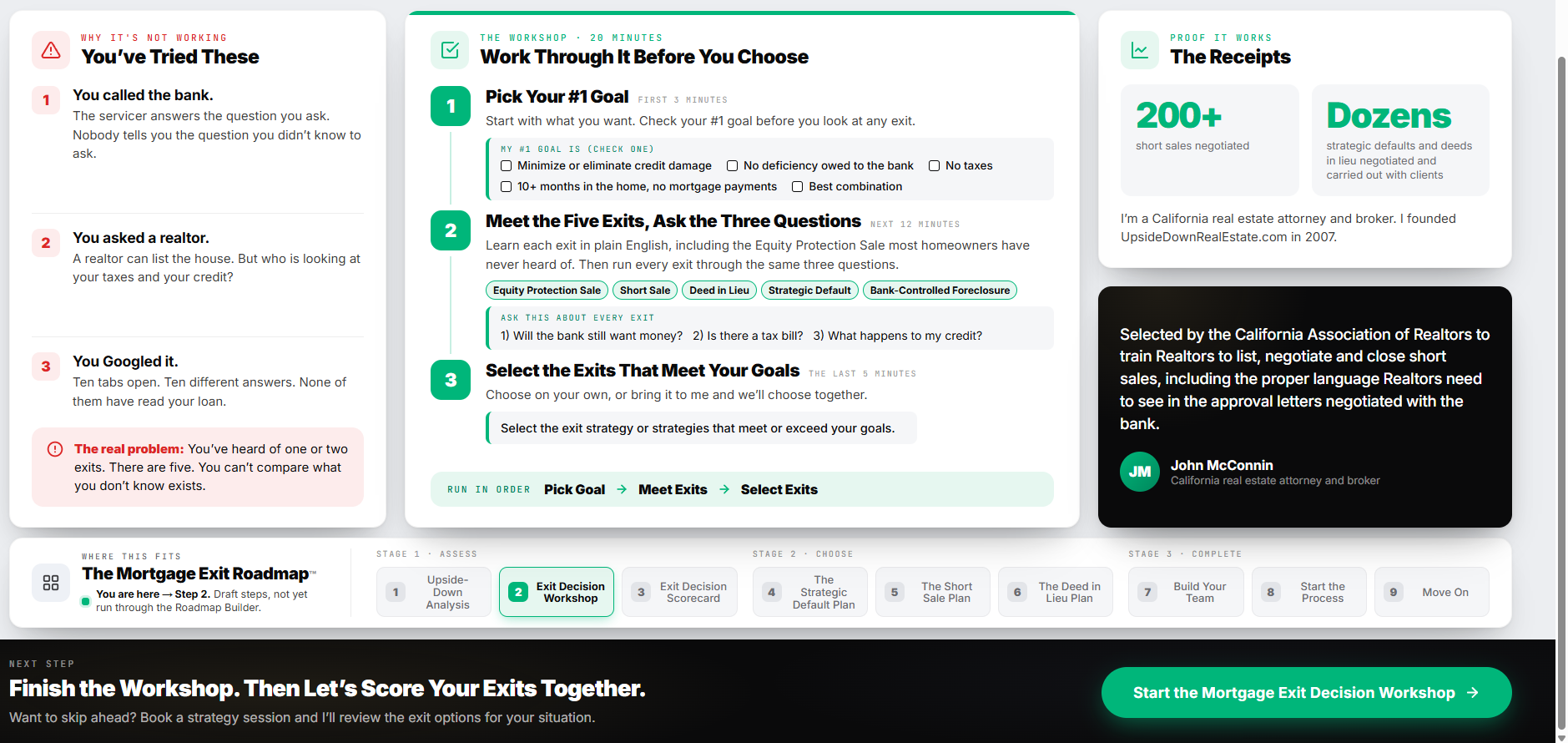
Three things to settle before you call
- Choose your hardship and document it. A documented hardship such as a job loss, medical event, divorce or relocation can matter a great deal for when you can borrow again. Under Fannie Mae and Freddie Mac guidelines, a short sale or deed in lieu with documented extenuating circumstances can mean a two year wait instead of four. Pick the hardship that is true for you, put it in writing, and keep it consistent.
- Know your anti deficiency protections. In California, many purchase money loans on a home you lived in are nonrecourse under CCP 580b, and a non judicial foreclosure generally ends the lender's right to a deficiency under CCP 580d. If you are protected, you may not need to hand the bank a full map of your assets. If you have a recourse loan or a second loan, you need to know that before you share anything.
- Keep a record of everything. Save copies of every document you upload to the bank's website, every form, and notes from every call. Your hardship story must match from start to finish. Changing it, or giving answers that conflict with your original loan application, can trigger a fraud review and can cost you protections you would otherwise have.