Deed in Lieu and Your Credit: Why Starting While Current Matters
Quick Answer
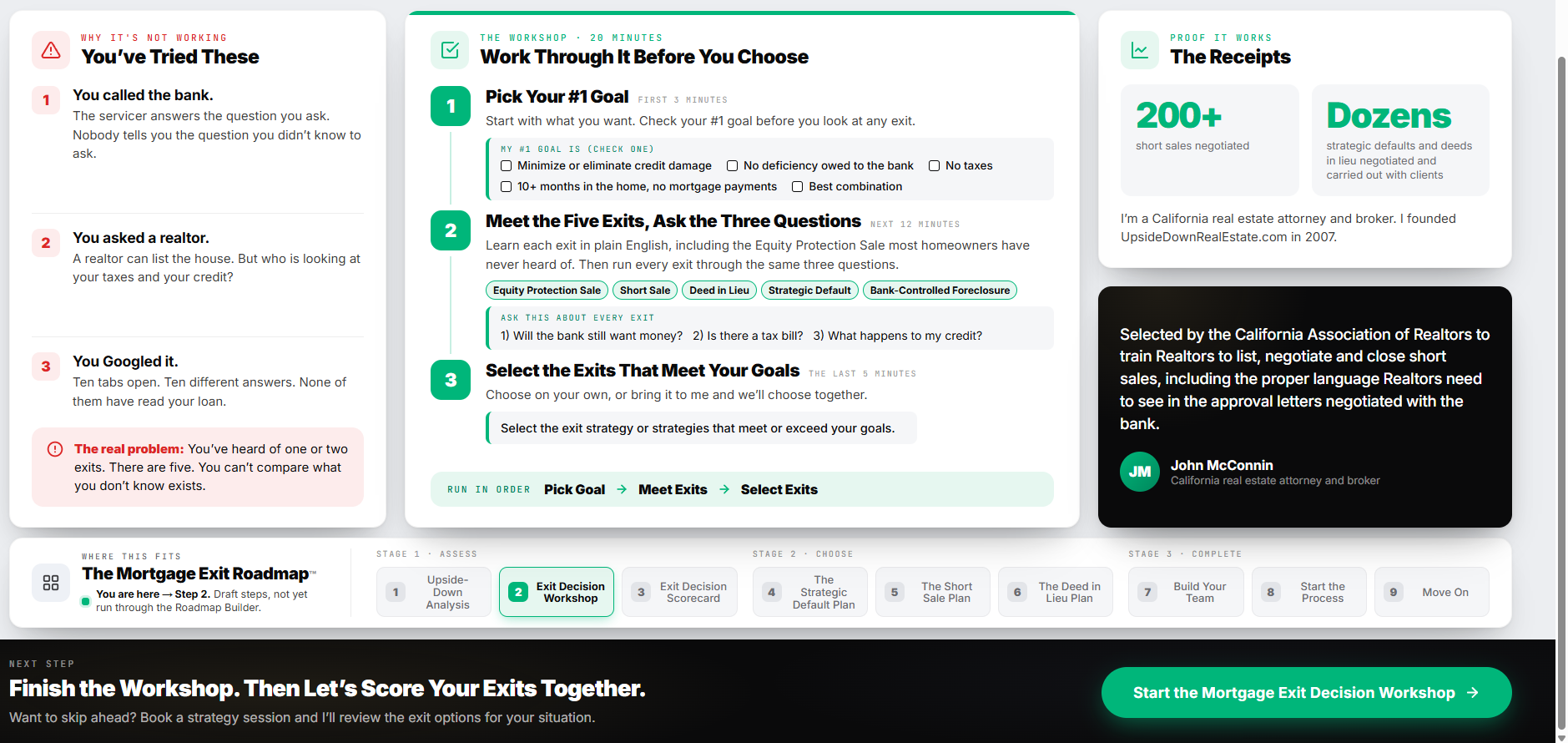
A deed in lieu of foreclosure can protect your credit better than many homeowners expect, especially if it is negotiated while you are still current. In a recent case our client was still current, the bank agreed to accept her deed in lieu, and the terms were that it would not harm her credit. Results vary, but the deed in lieu is often the best place to start.
Why banks find a deed in lieu easier
In a short sale, the bank sees the sale price, the commissions and the closing costs, so it knows exactly how short it is. In a deed in lieu there is no sale. There are no commissions and no closing costs, which often saves the bank six to eight percent compared with a short sale. The bank simply takes the property back.
That gives the bank more room to agree to terms that protect you, including how the loan is reported.
Your leverage is strongest while you are current
The usual advice is that you have to be late before the bank will discuss a workout. That may be true for a standard Realtor negotiated short sale. It is not always true when an attorney presents the file.
While you are current, the bank's investor is likely a year away from getting the property back if you stop paying and use the protections California law gives you. A well prepared offer explains that to the servicer:
- You will not owe the bank a deficiency under California law
- You may not owe taxes, depending on your loans
- So the only thing left to negotiate is your credit
- In exchange, the investor gets the property back now, in broom swept condition, with clear title
When the servicer understands the deal, it often needs to take it to the investor. That is how our recent deed in lieu was approved while the client was still current.
Offense and defense
On offense, you offer a deed in lieu while current to protect your credit, with a strong package and a clear explanation of why it is the investor's best option.
On defense, a deed in lieu can replace a foreclosure, sometimes after a short sale did not work. Document your hardship in the final terms either way.
What the final terms should say
The final agreement should state that the bank takes the property back in full satisfaction of the loan, how the loan will be reported, and your documented hardship. The terms should match the result you agreed to and give you a way to enforce it.
The tax result depends on the 1099C rules and your loans. Talk to an attorney before you sign. A properly structured deed in lieu can be a major tax advantage.